You use it every day, several times a day. It sits proudly on the edge of your sink. Yet the classic yellow and green sponge is a veritable nest of bacteria and an ecological disaster. Today, switching towashable and reusable sponge is no longer just a “boo-boo” trend, it’s a common-sense gesture for your health and your wallet.
In this comprehensive guide, we’ll explore why this little textile accessory is such a game-changer in our kitchens.
Contents
- Why say goodbye to disposable sponges?
- The advantages of washable and reusable sponges
- How to care for your ecological sponge?
- Focus: The French-made JaMoonLBV® washable sponge
- Ecological impact and savings
1. Why say goodbye to disposable sponges?
Traditional synthetic sponge is often made from resin foam (derived from petroleum) and treated with chemicals to give it its color and texture. Worse still, it’s impossible to recycle.
By using a washable, reusable sponge, you avoid throwing away around 20 to 50 sponges a year. Multiply that by the number of households, and you’ll understand the magnitude of the change.
2. The advantages of washable and reusable sponges
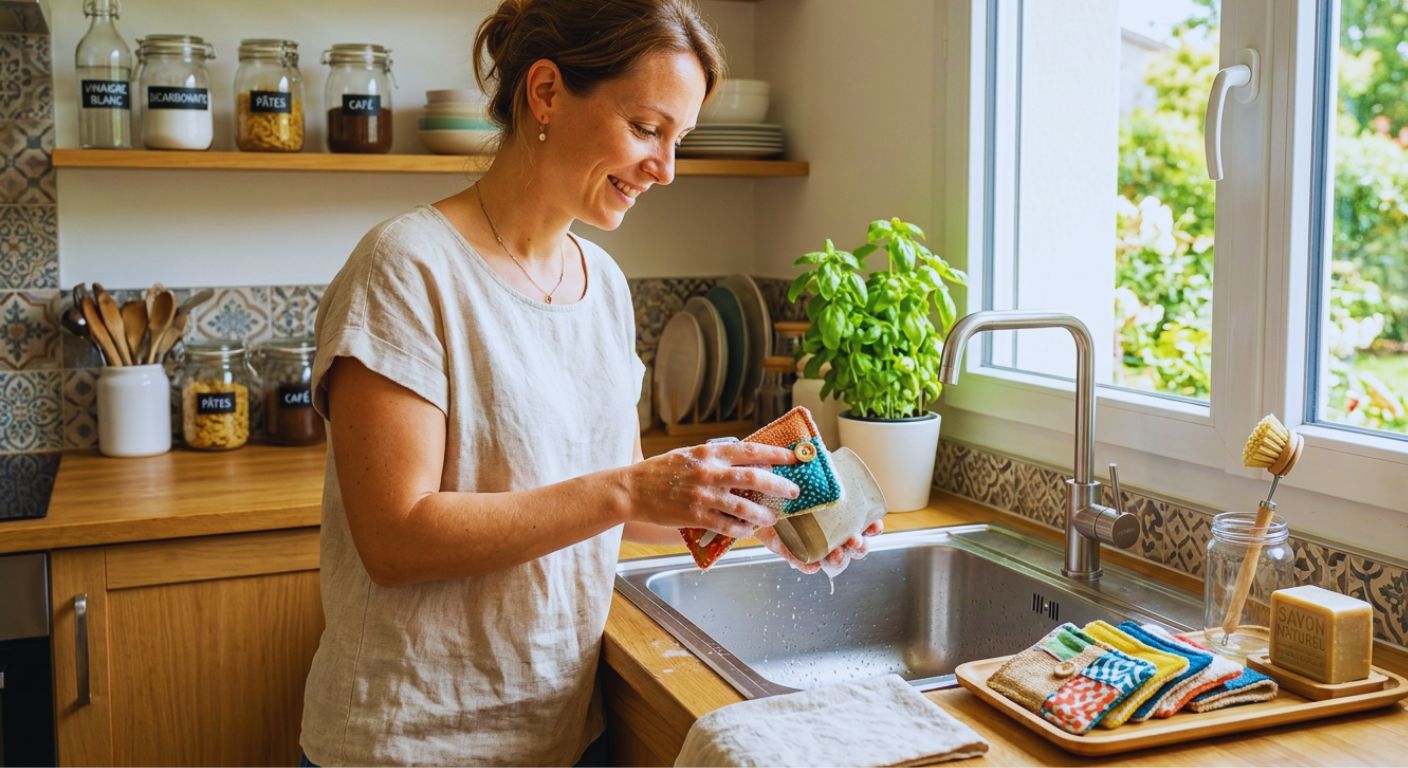
Adopt a washable and reusable spongeis to choose efficiency without compromise. Here’s why it’s the winner:
- Impeccable hygiene: unlike its disposable cousin, which accumulates germs, the textile sponge can be machine-washed at high temperature.
- Durability: a good sponge can last a year or more.
- Versatility: cleans dishes, worktops and induction hobs without scratching.

3. How to care for your ecological sponge
Maintaining a washable, reusable sponge is child’s play. To ensure maximum longevity, follow these tips:
- Rinse well after each use to remove food residues.
- Wring it out vigorously and hang it up (many have a discreet tab).
- Machine-wash once a week with your household linen (40°C to 60°C).
- Avoid tumble-drying to preserve natural fibers like cotton or bamboo.
To find out more about textile hygiene standards, consult ADEME’ s recommendations on household waste management.
4. The French-made JaMoonLBV® washable sponge: Local excellence
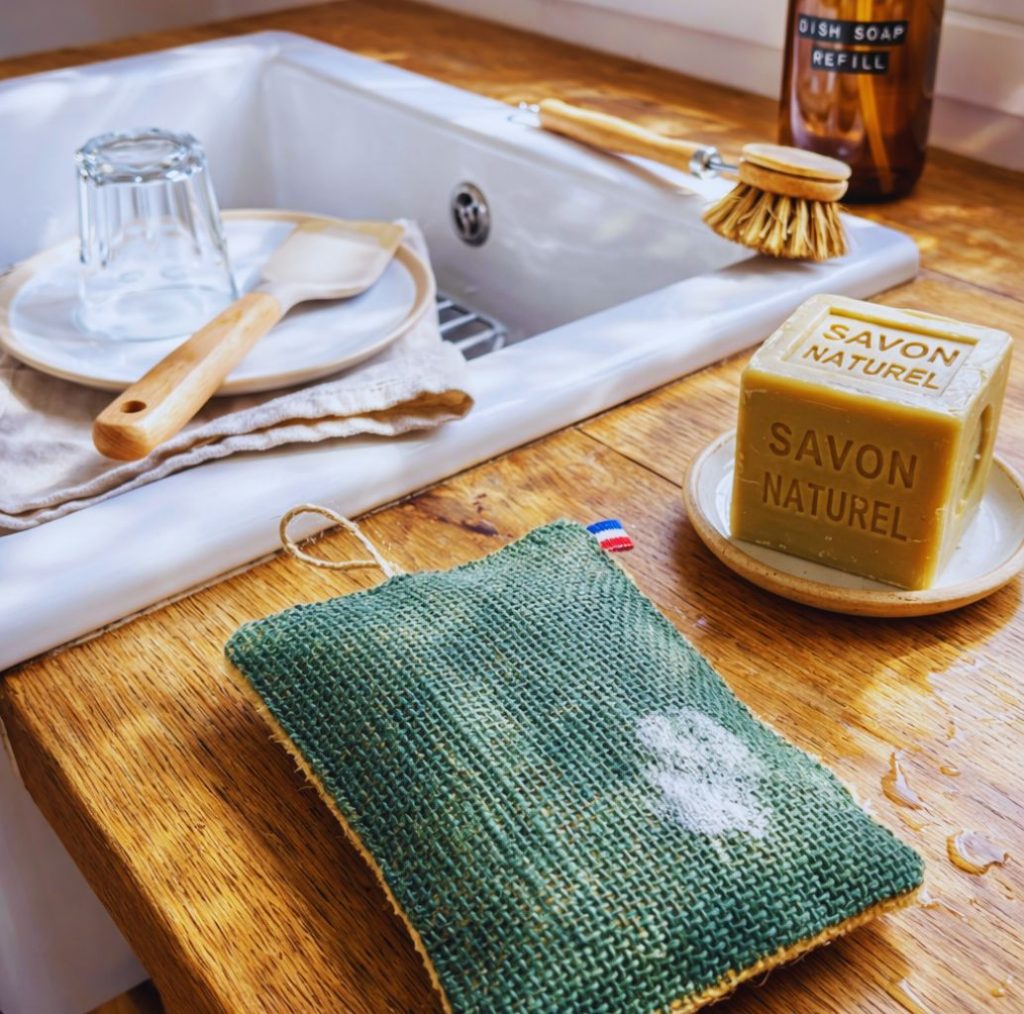
If you’re looking for the crème de la crème,JaMoonLBV®’s French-made washable sponge is a must-have. Designed with passion, this washable and reusable sponge stands out for its sewing quality and choice of materials.
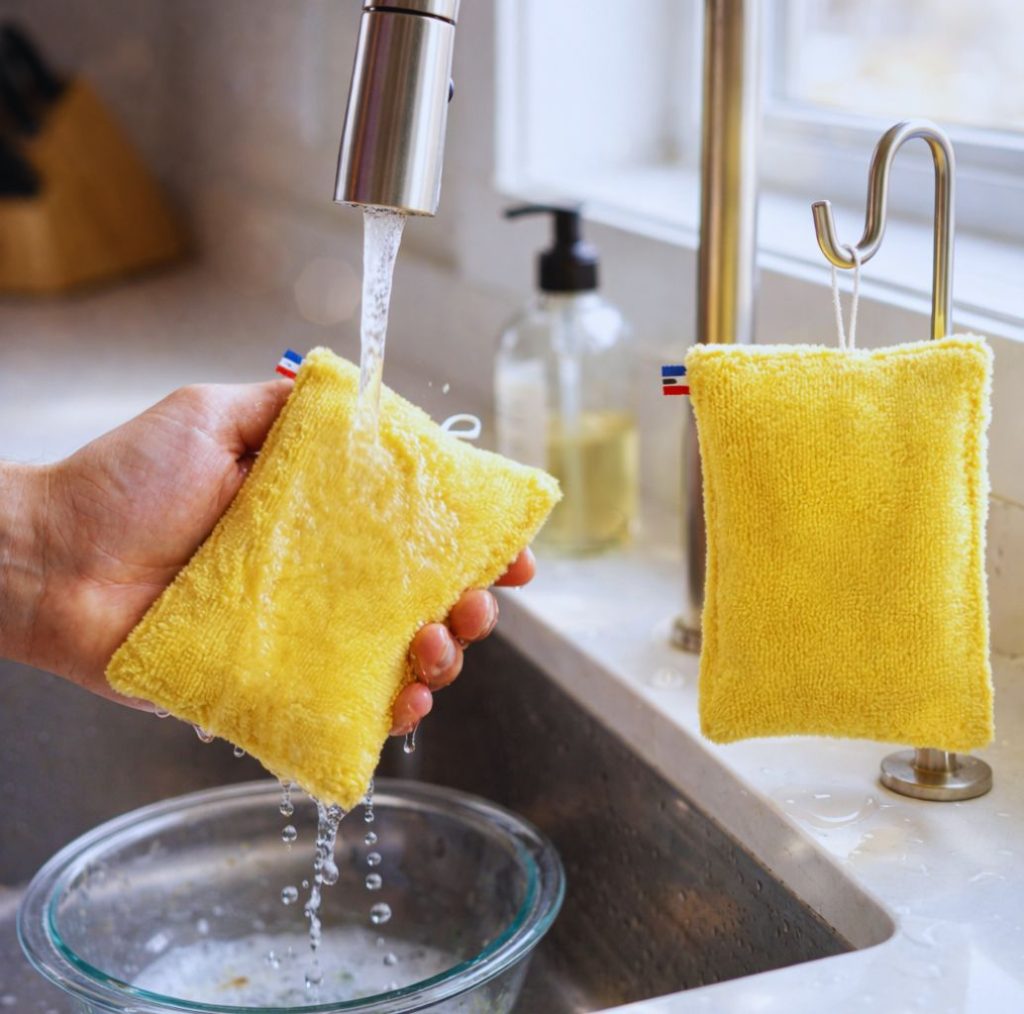
When you choose JaMoonLBV®, you support French craftsmanship while benefiting from a robust product. Their models often feature a jute face and a bamboo micro-sponge face for superior absorbency. It’s the perfect example of the short circuit: less transport, more quality, and direct support for the local economy. A must-have for those who want to combine zero waste and economic patriotism.
5. Ecological impact and savings
Switching towashable and reusable sponges is a worthwhile investment from the very first months.
In addition to your sponges, remember to use healthy household products. You can make your own homemade washing-up liquid by following recipes on reference blogs.
Why choose textile over silicone?
Some people opt for silicone sponges, but thewashable, reusable fabricsponge is still more effective at absorbing liquids and lathering soap. Textile offers a more natural feel and better ergonomics in the hand.
Conclusion: one small step for you, one giant leap for the planet
Thewashable and reusable sponge is not just an ordinary gadget. It’s the symbol of a successful transition to a more conscious lifestyle. Whether handmade or from committed brands such as JaMoonLBV®, they fulfill their mission brilliantly: to clean effectively without destroying.
So, are you ready to take the plunge? Your sink is just waiting for you!